Does Technical SEO Still Matter for AI Search? What Google's John Mueller Said
Andy Harris · November 3, 2026 · 8 min read
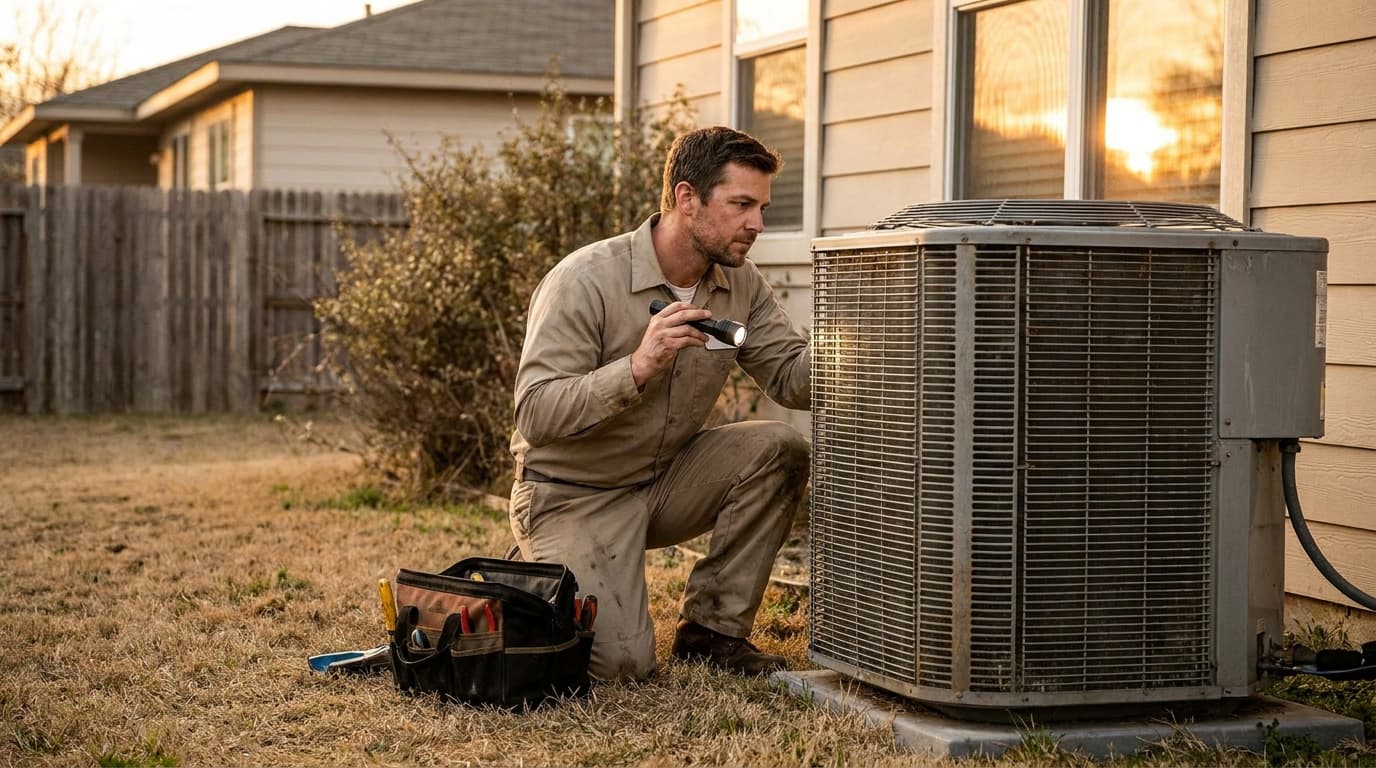
Yes. Google's John Mueller said AI systems build on SEO, and he expects technical SEO to stay very relevant. For an HVAC, plumbing or roofing company, that means the basics still decide whether your service pages get found: a site Google can crawl, clear pages, and a Google Business Profile that matches.
Does technical SEO still matter for AI search?
Yes. According to Martin Buster at Search Engine Journal, Google's John Mueller said many AI systems build on SEO, so technical SEO will keep mattering. AI crawlers may behave slightly differently, but Mueller called that another flavor of technical SEO. Nothing in that interview says the basics are obsolete.
The interview was conducted by David Iwanow. The interviewer asked whether AEO and GEO, the labels people use for optimizing for AI answers, are dead. Mueller didn't treat the question as a reason to throw out what already works.
In his words: "I think especially technical SEO is going to remain very relevant."
If you've been told you need a whole new playbook for ChatGPT or Google's AI answers, that's worth a second look. A lot of what gets sold as new is the old work with a new name on it.
What did Mueller say about short-term AI tactics?
Mueller said short-term tactics always expire. Something works, everyone piles in, many do it badly, and then the systems catch up. His advice was to build a serious, stable foundation for the website, and to experiment on the side only if you keep your eye on the long-term goal.
That goal, as he put it, is having something that search engines and AI systems will want to show to people in the long run. Not something that tricks them for a few months.
I've watched this cycle with contractors for years. A tactic shows up, a vendor sells it hard, and for a while it works. Then it stops, and the business owner is left with a bill and nothing built.
The part worth remembering: Mueller said all of these AI systems are still new and evolving quickly. Anything you build on a quirk of how they behave today can be switched off tomorrow.
Are listicles a smart move for a home-services company?
A listicle is a "top companies" page, often written to nudge AI chatbots into naming the author as the best in the industry. Mueller did not call every listicle spam, but said it needs to add value. If your whole strategy is listicles, he warned, it can switch off and leave you with nothing.
Picture a "Top 10 HVAC Companies in Your City" page, written by one of the ten, with itself at number one. Homeowners can smell that. Eventually the systems can too.
Mueller's point was that the tactic isn't the problem on its own. Thin, self-serving content is. A page that genuinely helps a homeowner decide, such as how to tell whether a furnace needs repair or replacement, adds value. A page that exists only to rank doesn't.
What does technical SEO mean for an HVAC or plumbing website?
For a home-services site, technical SEO means Google and AI crawlers can reach your pages, understand them, and trust them. That covers whether pages load, whether each service and city has its own clear page, and whether your name, address and phone number match everywhere else online.
To be clear, this next part is my read, not something Mueller listed. Here is what I'd check on a contractor site first:
- Can search engines actually reach your service pages, or is something blocking them?
- Does each core service, like AC repair or water heater replacement, have its own page with plain, specific content?
- Is your site structure simple enough that someone could find a service from the home page in a couple of clicks?
- Does the page load fast on a phone, since that's where most homeowners are looking when something breaks?
- Is structured data, often called schema markup, in place so machines can read your business details without guessing?
None of that is glamorous. It's the unglamorous work that Mueller says keeps paying off.
If a crawler can't read your site cleanly, it doesn't matter how good your writing is. And if the crawler can read it but every page says the same thing, you've given it nothing worth surfacing.
How do I know if my SEO vendor is doing real work?
Mueller said small businesses should always question what their vendors are doing and never just take an SEO company's word for it. That's fair. Ask for specifics: what changed on your site, what changed on your profile, and what happened to calls, not just a ranking report.
Martin Buster wrote that some shady companies charge a monthly retainer and do little beyond sending a ranking report, while others use low-quality tactics like buying links. Mueller made the same point from Google's side: it's not new, and it's now being repeated for AI.
Here are the questions I'd ask any vendor, in this order:
- What exactly did you change on my website or Google Business Profile this month?
- Why did you make each change, and what do you expect it to do?
- Are you using any tactic that would embarrass me if a customer or Google saw it?
- Can you show me phone calls or booked jobs, not only rankings?
- If I stop paying you tomorrow, what do I still own?
A good vendor answers these in plain language. A vendor who gets vague or defensive just answered a different question for you.
Where does my Google Business Profile fit in?
Your Google Business Profile is part of the same foundation. Nobody outside the AI companies can tell you exactly which sources each assistant reads, but an accurate profile that matches your website is cheap insurance. Keep categories, services, hours, photos and reviews current.
I'm not going to claim a profile guarantees you show up in an AI answer. Nobody honest can. What I can say is that mismatched information is a problem under any system. If your website says you serve one set of towns and your profile says another, or your phone number differs between the two, you're making it harder for every system to trust you.
If you want to see where you stand, the Google Profile Audit checks your profile for the gaps that tend to cost contractors calls. The AI Visibility Report shows how your business appears when people ask AI tools about your trade in your area.
What should a contractor do this month?
Do the basics in order: confirm your site is crawlable, give each core service its own clear page, make your business details match everywhere, and question your vendor. Then, only after that, experiment with newer AI tactics. Mueller's advice was foundation first, tricks second.
Here's a simple plan:
- Pull up your website on your phone. If a service page is slow, confusing or missing, fix that before anything else.
- List your core services and check each one has a page that describes it in plain language for your service area.
- Compare your name, address and phone number across your website, Google Business Profile and major directories. Fix any mismatch.
- Read your Google Business Profile like a customer would. Are the categories, services and photos right and current?
- Ask your vendor the five questions above and write down the answers.
- Run your free Local Visibility Score to get a baseline before you change anything.
Step six matters because you can't tell if the work helped without a before picture.
Common questions
Is AEO or GEO dead?
The interviewer asked Mueller that directly. His answer was that AI systems build on SEO, so it stays relevant. Experimenting is fine, he said, as long as the foundation comes first. Treat new AI tactics as extras on top of the basics, not a replacement for them.
Do AI crawlers work differently from Google's crawler?
Mueller said his understanding is that AI systems crawl slightly differently, with different intents, such as training versus getting the freshest content. He still called that another flavor of technical SEO. For you, the practical point is the same: keep your pages reachable, current and clear.
Should I hire someone for AI SEO?
Only if they can show you what they changed. Mueller's advice was to question vendors and never take their word for it. A good vendor explains the work in plain language, shows changes on your site and profile, and ties results to calls and booked jobs.
Are listicles worth writing?
Only if they genuinely help a customer. Mueller said a listicle needs to add value and warned against making it your whole strategy. A page that helps a homeowner choose, like how to decide between repairing and replacing a furnace, beats a self-promoting "top companies" list.