85% of Small Business Owners Make Marketing Decisions Alone—Here's What That Costs
Andy Harris · October 26, 2026 · 8 min read
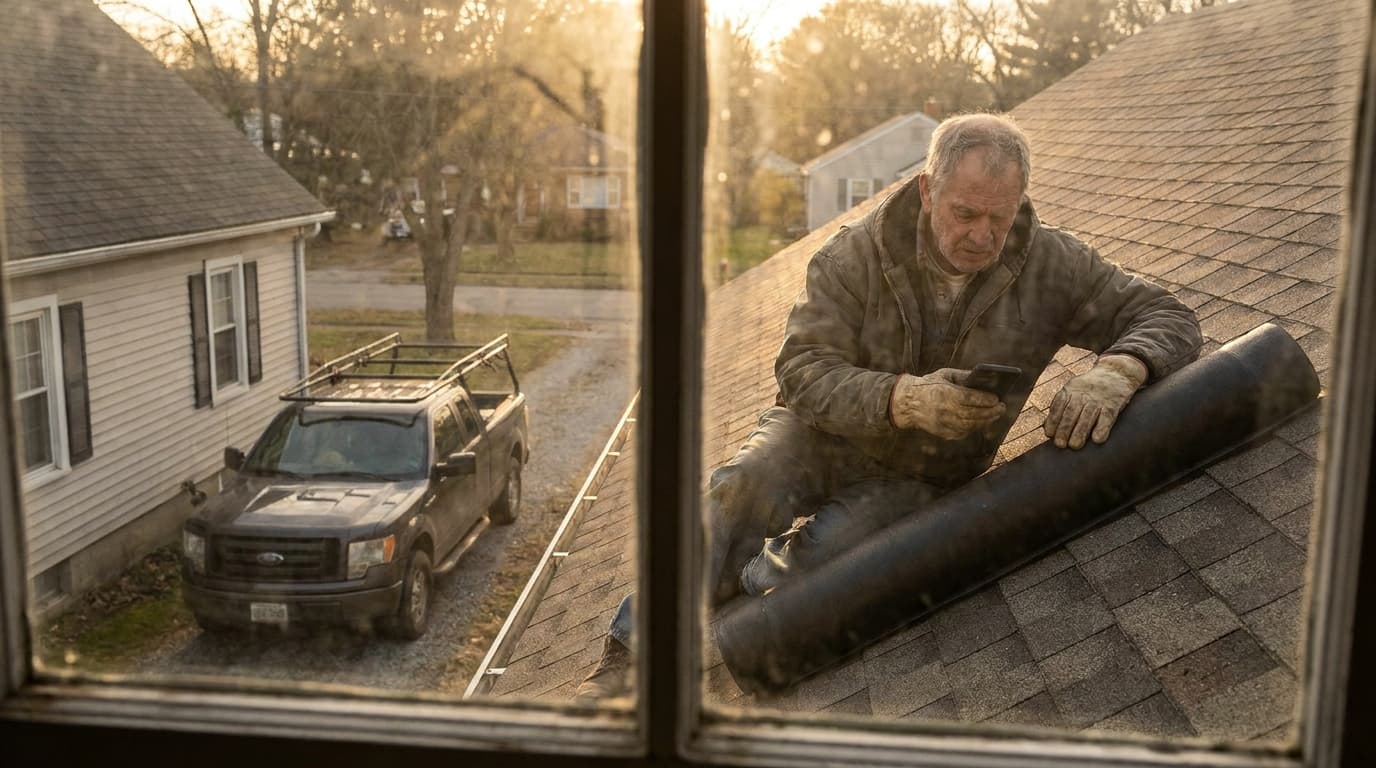
If you're the only one handling marketing, the cost is mostly what nobody is watching: unanswered reviews, a Google Business Profile that goes stale, and leads that quietly go to a competitor. You're in the majority. BrightLocal found 85% of small business owners make marketing decisions themselves.
Is it normal for a contractor to handle all the marketing alone?
Yes. According to BrightLocal's Small Business Marketing Report 2026, 85% of small business owners take primary responsibility for marketing decisions, and only 2% hold no sole or shared responsibility. That means 98% are involved. Doing it yourself is the norm, not a sign you're behind.
The report, written by Rosie Murphy at BrightLocal, surveyed 1,000 US small business owners. These were owners, co-owners, CEOs and founders running businesses with 1 to 50 employees that serve a local customer base. That describes most roofing, pest control, plumbing and HVAC companies.
Here's the part that matters for you. Being the decision-maker is fine. The trouble starts when the decision-maker is also the one on the roof, in the crawl space, or in the truck between estimates. Marketing becomes the job that gets done when everything else is finished. For most owners, that means it rarely gets done.
What stops small business owners from doing more marketing?
According to the same BrightLocal report, the biggest barrier is that marketing feels hard. 28% said it feels too technical or complicated, and others said they don't know enough about how it works or aren't sure where to start. Budget, lack of time, and not seeing the return also held owners back.
That last one deserves a closer look. BrightLocal's key findings say a quarter of owners doubt marketing makes a difference, and some quit after not seeing results.
I understand that. If you paid for something that never produced a phone call, you'd stop too. But "marketing didn't work" and "nobody was managing it" are two different problems. Many of the failures I see in home services come from the second one.
A roofer who ran a few ads, saw nothing, and quit has learned that ads didn't work for him. He hasn't learned that his Google profile was fine. Those are separate questions, and the profile is usually the cheaper one to fix.
What does doing marketing alone cost a roofing or pest control company?
The cost isn't a line on an invoice. It's the work nobody is watching: a review that sits unanswered, a phone number or service area that's out of date, a message nobody replied to. The report doesn't put a dollar figure on it, so I won't either. But the lead usually goes to the next company.
Here's why I tie this to Google. BrightLocal notes that most consumers turned to Google in their most recent local search. The same report says small businesses are most likely to be active on Facebook, websites, Instagram, Google Business Profile and TikTok. Those two lists don't line up neatly.
Owners spread their limited attention across several platforms. Customers are looking at one of them first.
Think about a homeowner who finds a wasp nest or a leak in the ceiling. They don't browse. They search, look at the first few businesses, check the reviews, and call. If your profile has the wrong hours, no recent photos, or three reviews from customers who never got a reply, they call someone else. You never find out that call happened.
That's the real cost of working alone: you can't see the leads you didn't get.
What should I check on my Google Business Profile every week?
A weekly check should take about 15 minutes and cover what customers see first: your listing, your contact details, your reviews, and your messages. BrightLocal suggests starting by looking at what customers find when they search for your business. Do exactly that, then work through the list below.
- Search your business the way a customer would. On your phone, search your main service plus your city, then your company name. See what comes up and what's missing.
- Check the basics. Confirm your business name, phone number, hours, website link and service areas are correct. Fix anything that's changed.
- Read new reviews and reply to every one. Thank the happy customers by name. Answer the unhappy ones calmly and offer to make it right.
- Check messages and questions. If a customer asked something through your profile, answer it the same day.
- Add one fresh photo. A finished roof, a treated foundation, a clean crew truck. Real work beats stock images.
- Ask for reviews after finished jobs. Do it while the customer is still happy, not three weeks later.
None of this is technical. It's repetitive, and that's why it gets dropped.
If you want a quick read on where you stand before you start, our free Local Visibility Score shows how your business appears in local search. For a closer look at the profile itself, there's the Google Profile Audit.
Why does consistency matter more than a big marketing push?
Consistency matters because search systems reward businesses whose information matches across the web and who keep adding reviews and content. BrightLocal's CEO Myles Anderson says AI search rewards that consistency. One big push followed by months of silence leaves you with stale details and fewer signals than a competitor who shows up every week.
Anderson also makes a point I agree with. In the report he says "no agency knows a business better than the person running it." That's true. You know your customers, your pricing, and which jobs you want more of.
But he adds that the harder part isn't knowing what to do. It's doing it well and repeating it every week and month. Owners need a system, or a partner, that delivers it.
That matches what I see. Nobody needs a lecture on why reviews matter. What they need is for the reviews to get answered in week 14, when the schedule is packed and a storm just rolled through.
When does it make sense to hand this off?
It makes sense when the weekly checks stop happening. If reviews pile up unanswered, your hours or service areas are wrong, or you can't remember when you last added a photo, you have a time problem, not a knowledge problem. A system or a partner fixes that. Another tool you have to log into usually won't.
Be honest with yourself about three things:
- Do you actually do the weekly check? If the answer is "I mean to," that's your answer.
- Do you know how many calls and messages come from your profile? If not, you're guessing about the return, which is one of the reasons owners in the report gave up.
- Is your time worth more on the job or in a dashboard? For most owners, it's on the job.
You don't have to hand over your whole marketing budget. Start with the part that's cheapest to fix and closest to the phone ringing: your Google Business Profile. That's what our local search service covers. We keep the profile accurate, reply to reviews, and watch the details so the owner doesn't have to.
You keep making the decisions. Someone else makes sure they actually get carried out.
Common questions
What percentage of small business owners handle their own marketing?
According to BrightLocal's Small Business Marketing Report 2026, 85% of small business owners take primary responsibility for marketing decisions. Only 2% said they hold neither sole nor shared responsibility. So 98% have a hand in it, even in the larger businesses in the study, which had up to 50 employees.
Why do small business owners avoid marketing?
BrightLocal found the top reason is difficulty. 28% said marketing feels too technical or complicated, and others said they don't know enough or don't know where to start. Budget, lack of time, and not seeing the return also came up. A quarter of owners doubt marketing makes a difference at all.
What's the first thing a home-services owner should fix?
Start with your Google Business Profile, because most consumers turn to Google in their most recent local search, according to BrightLocal. Check your contact details, hours and service areas, reply to your reviews, and add real job photos. It's the cheapest fix that sits closest to the phone ringing.
Do I need an agency to manage my Google Business Profile?
No. BrightLocal's CEO points out that owners are increasingly signing up for software directly and that nobody knows your business better than you. The real question is whether the weekly work gets done. If you can't keep up with it, a partner or a system helps.