Five Ways Local HVAC Companies Beat AI-Slop Competitors Without Writing a Single Prompt
Andy Harris · November 9, 2026 · 9 min read
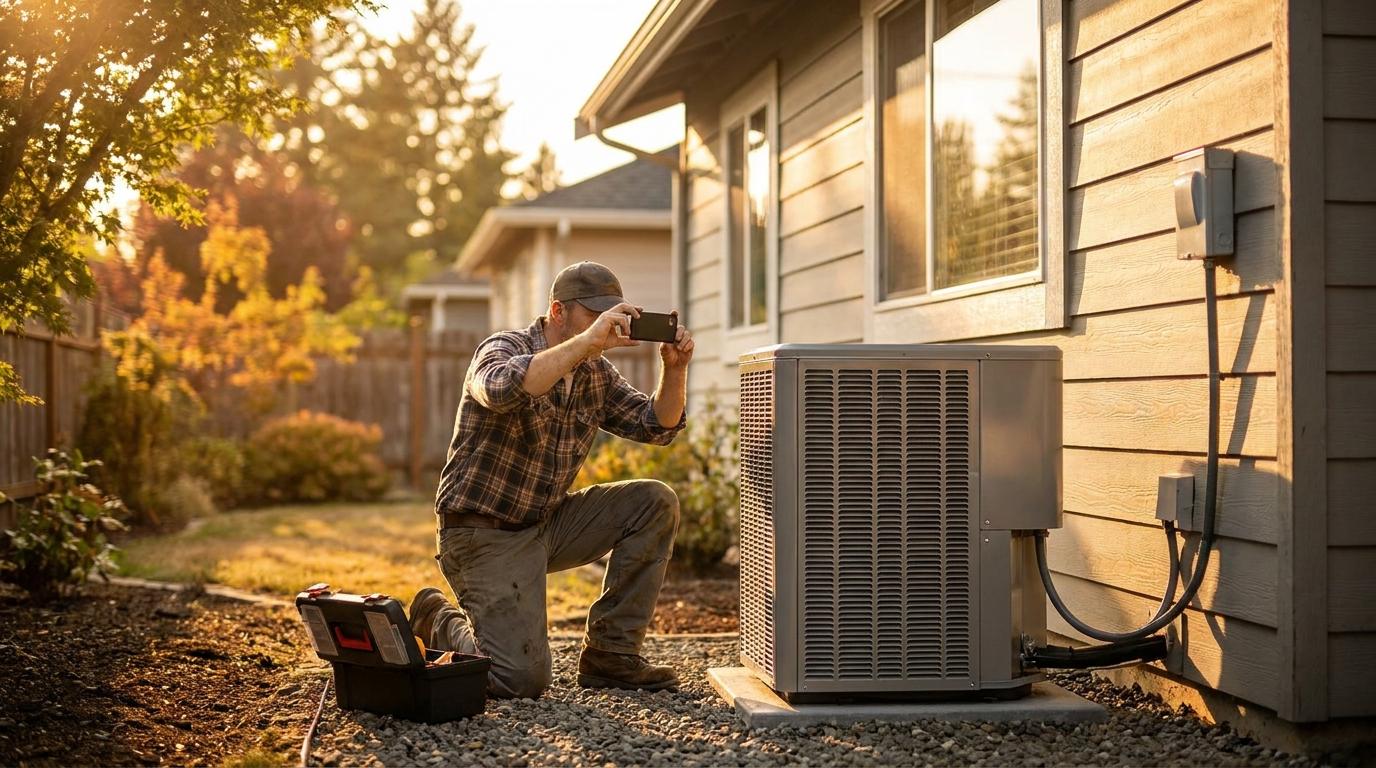
Use what AI cannot fake: real jobsite photos, before-and-after video of your own installs, handwritten thank-you notes, named technicians, and review replies you write yourself. Customers can tell when a brand did not bother. Whitespark's Miriam Ellis asks whether AI marketing could make a brand invisible or disliked.
Why does AI-generated marketing hurt a local HVAC company?
It makes you look like everyone else. When a homeowner is comparing a few companies, a generic flyer or service blurb gives them no reason to pick you. Sameness is the real cost. The tool is not the problem. The problem is that every competitor using it ends up saying the same thing.
Miriam Ellis wrote about this on November 5, 2026, in a Whitespark post on affordable alternatives to AI marketing. She points to ChatGPT-generated business flyers that all look alike, and says that sameness runs against good marketing practice.
She also cites a Glassdoor study. According to Whitespark, 81% of employee reviews that mentioned AI in 2019 were positive. By 2026 that figure had dropped to 43%. Those are employee reviews, not customer ones, so don't read too much into it. But it shows the mood around AI is not as warm as the tech companies would like.
Then there's the blunt version. Whitespark's Darren Shaw says of AI images in content: "you're dead to me." He's a marketer, not a typical homeowner. Still, plenty of people feel some version of that.
Here's my take for HVAC. Your customer often has a dead AC or no heat. They are nervous about a big bill and about letting a stranger into the house. Content that looks fake works against the one thing you need, which is trust.
What can an HVAC company do instead of AI marketing?
Show proof that the work is real. That means your trucks, your technicians, your jobs and your customers, shown plainly. Five cheap, repeatable habits cover most of it. None needs a prompt, a subscription or a designer. They need a phone and a few minutes after each job.
These are my five, built from Whitespark's core point that originality beats sameness. They are not a summary of Whitespark's list.
- Post real jobsite photos.
- Record short before-and-after videos.
- Send handwritten thank-you notes.
- Put real names and faces on your technicians.
- Reply to every review yourself.
Each one gets a section below.
How do jobsite photos help an HVAC company get found?
Real photos of real jobs tell a homeowner, and Google, that you do the work you claim to do. A photo of a new condenser on a pad, a clean line set, or a tidy attic install is hard to fake and easy to trust. Post them to your Google Business Profile.
Take three photos at the end of every job: the equipment, the finished install, and the work area left clean. Don't include the customer's face or house number. Upload them to your profile the same day.
Compare that with a stock-looking image of a smiling technician holding a thermostat. Nobody believes that one. A slightly crooked phone photo of an actual furnace in an actual basement beats it.
If you want to know how complete your profile looks right now, run the free Local Visibility Score. It shows what's missing, and photos are often on the list.
Why do before-and-after videos work better than written service descriptions?
A short video shows the result in seconds, and nobody has to read a paragraph of generic copy. A twenty-second clip of a failing system and then the new one running does more than a written description of "reliable heating and cooling services." It is also hard for a competitor to copy.
Keep it simple:
- Film the old equipment before you touch it, with the nameplate in view if the customer is fine with it.
- Film the finished install and the system running.
- Say one plain sentence about what you did and why.
- Post it to your Google Business Profile and your social pages.
Don't edit it into something glossy. Glossy starts to look like everything else. Shaky and honest looks like a company that actually shows up.
Ask the customer before you film or post anything. Keep faces, addresses and license plates out of the frame.
Do handwritten thank-you notes still matter for HVAC companies?
Yes. A handwritten note is a real person spending real time, and almost nobody does it anymore. It costs a pen and a card. It makes a customer remember you, and a customer who remembers you is more likely to leave a review and call you again.
Write two sentences. Use their name, mention the job, and sign it. Don't use a template. If the technician who did the work signs it too, even better.
Then do the part most people skip. In the note or in a follow-up text, ask if they'd be willing to leave a review. People are far more willing to help someone who clearly cared about their job.
This one has no tracking pixel and no dashboard. That's the point. It's the opposite of automated, and customers feel the difference.
How do named technicians build trust with homeowners?
People let technicians into their homes, so they want to know who is coming. Names, faces and a short real bio answer that worry before the call. A profile that says "Mike will be there between 1 and 3" is more reassuring than any slogan.
Add technician photos to your website and Google Business Profile. Put a first name on the appointment confirmation. Mention the tech by name in your posts when a job went well.
Keep the bios short and human. How long they've been in the trade, what they fix best, maybe one thing outside work. Write it yourself, or have the tech write it. If it reads like a brochure, redo it.
It's the same idea Ellis describes when she talks about authentic, human-centered presentation of small brands. People respond to a brand that feels like actual people.
Should HVAC owners reply to Google reviews personally?
Yes. A review reply is public, and future customers read it. A reply that mentions the actual job shows a real person is paying attention. Copy-and-paste replies look automated and say you don't care much, which is the very thing you're trying to avoid.
Reply to every review, good and bad. For a good one, thank them and mention something specific: the new system, the late-night call, the tech's name. For a bad one, stay calm, say what you'll do, and offer to talk offline.
Ellis's post makes a point that applies here. AI tends to flatter you and make you think the output is brilliant, while the public sees a company that didn't care enough to do its best. A tool that always says your reply is great is not a good editor.
Shaw quotes a line he attributes to Nick Pierno, and I like it for review replies too: why should I read something you couldn't be bothered to write? Your customers think the same.
Does this mean HVAC companies should never use AI?
No. Ellis's argument is about how AI shows up in front of customers, not about what you do in the back office. Using AI for scheduling, bookkeeping or phone answering is a different matter from putting AI-made images and copy on your public profile.
My rule is simple. If the customer sees it and it's supposed to prove who you are, a real person should make it. If it's plumbing behind the wall, such as call handling or after-hours answering, tools can help. That is why we build voice agents for missed calls and keep the public-facing stuff human.
I should be clear about what the source says and what I'm adding. Whitespark makes the case against AI sameness and for originality. The HVAC specifics, such as the photo routine and the thank-you notes, are my own experience and opinion, not Whitespark's research.
What should an HVAC owner do this week?
Start small and make it a habit. Pick one job a day, take three photos, post one to your Google Business Profile and send one handwritten note. That's a few minutes. After a month you'll have a profile that looks like a real company, because it is one.
Here's a simple first-week plan:
- Run your free Local Visibility Score to see where your profile stands.
- Get a Google Profile audit if you want a line-by-line list of what's missing.
- Add at least five real jobsite photos to your profile.
- Reply to every review from the last 90 days, in your own words.
- Buy a box of thank-you cards and keep them in the truck.
If you'd rather have someone handle the profile work, that's what our local search service does. The photos and notes, though, should still come from your crew. That's the part nobody else can do for you.
Common questions
Will customers really notice AI-generated marketing?
Some will, and some won't. Whitespark's Darren Shaw says he rejects content with obvious AI tells. You can't know which customers feel the same. The safer move is to make the content customers see look real, since real work photos cost almost nothing.
Are jobsite photos on Google Business Profile worth the effort?
Yes. They take a couple of minutes per job and show real work. Stock images do the opposite. A steady stream of your own photos also shows the profile is active, which helps customers trust that you're open and doing jobs.
Is it okay to use AI for anything in an HVAC business?
Yes. The warning is about customer-facing content that makes you look like everyone else. Back-office work and call handling are different. Keep anything that proves who you are, such as photos, videos, notes and review replies, in human hands.
How long does it take to see results from authentic marketing?
I can't promise a number, and the source doesn't give one. Real photos and replies build up over weeks and months. What you can control is consistency: a little every job, every day, rather than a big push once.