The Five-Part YouTube Script Framework That Turns Contractors Into Authorities
Andy Harris · October 19, 2026 · 10 min read
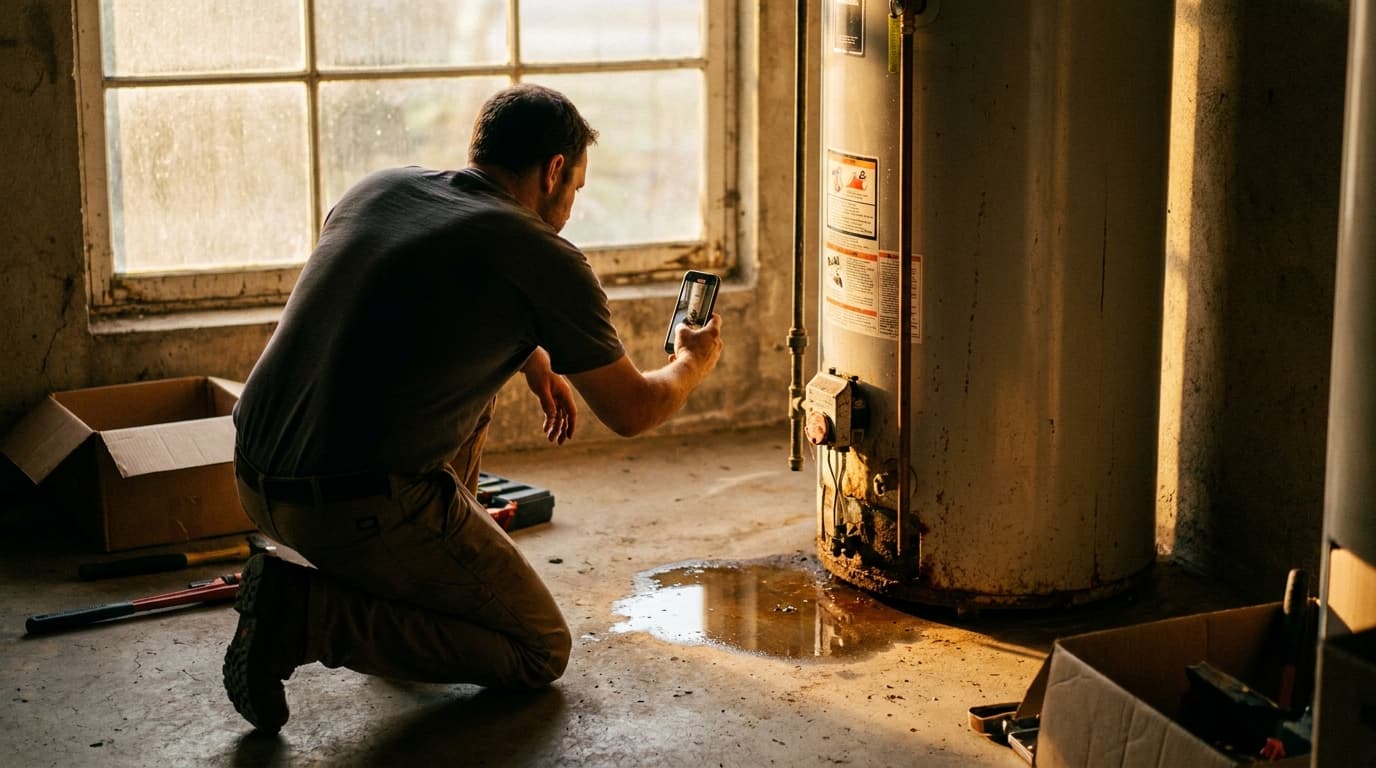
Use five parts: hook, problem, solution, proof, and call to action. Open with the question your customer is asking, state the problem in about thirty seconds, show the fix, show one before-and-after photo, then tell them how to reach you. Social Media Examiner covers this structure for YouTube scripting, and it fits home-services work well.
Most contractors know their work cold. The hard part is saying it on camera without rambling, apologizing, or burying the point. A simple script fixes that.
Why does a contractor need a script at all?
Because without one, you ramble. A script is just a short outline that keeps you from wandering into twenty minutes of shop talk. You do not need a teleprompter or memorized lines. You need to know what you will say first, what you will show, and how the video ends.
Think about how you explain a problem to a customer standing in their kitchen. You already do this well. You say what you see, what is causing it, what you would do, and what it will take.
The script just puts that conversation in order so a stranger can follow it on their phone. That is all "authority" means here: a homeowner watches you explain something clearly and decides you are the one to call.
What are the five parts of a YouTube script?
The five parts are hook, problem, solution, proof, and call. The hook earns the next few seconds. The problem names what the homeowner is dealing with. The solution shows the fix. Proof shows it worked. The call tells the viewer what to do next. Social Media Examiner lays out this structure in its YouTube scripting coverage.
Here is the order, translated for a trade business:
- Hook: say the question the homeowner is asking, in their words.
- Problem: explain what is going wrong and why, in about thirty seconds.
- Solution: walk through the fix the way you would do it on site.
- Proof: show one before-and-after photo from a real job.
- Call: give one clear next step and say it once.
Write each part as two or three bullet notes, not full sentences. If you read sentences off a page, you will sound like you are reading.
How do you write the hook for a water heater video?
A good hook is the question the homeowner already typed into Google, said out loud in your first sentence. For a plumber, that is "Why is my water heater leaking?" Say it plainly, stand next to the tank, and skip the logo animation and the long introduction about your company.
The hook has one job: tell the right person they are in the right place. Someone with a puddle around their water heater does not care how long you have been in business yet. They want to know if you can explain what is happening.
Say your name and trade in the same breath if you want, but keep it short. "I'm a plumber, and here is why your water heater is leaking" does the whole job.
Pick hooks from the questions you actually get on the phone. Those are the questions other homeowners are asking too.
How do you explain the problem in thirty seconds?
Spend about thirty seconds on the problem. Name the symptom, the usual cause, and what it costs the homeowner if they ignore it. Keep it in plain words. If a customer would not say "expansion tank" at the kitchen table, you should not say it either without explaining it.
For the leaking water heater, that could be three quick points: where the water is coming from, what that usually means, and what happens if it keeps going. A leak from a fitting on top is a different story than water pooling under the tank, and saying so shows you know the difference.
Thirty seconds is tight. That is the point. If you cannot explain the problem in that time, you are explaining too much. Save the extra detail for a second video.
How do you show the solution without giving away the whole job?
Show the fix in the order you would do it on site, and be honest about what a homeowner can handle and what needs a licensed pro. Explaining the fix does not lose you the job. It shows you know what you are doing, which is why people call.
Some viewers will try a simple fix themselves. Good. They were never going to hire you for that, and they will remember who helped.
The ones with a failing tank, a gas line, or a panel issue will see exactly why it is not a weekend project. Tell them that directly. A line like "this part you call someone for" builds more trust than any sales pitch.
Keep the solution to the main steps. You are not training a new hire. You are helping a homeowner understand what the repair involves.
What counts as proof in a home-services video?
Proof is one honest before-and-after photo from a real job. Show the corroded fitting next to the new one, or the stained ceiling next to the repaired one. One clear photo beats a slideshow, and it tells viewers you do this work every week, not once a year.
Take the photos on the job, before you start and after you finish. It costs you a few seconds on site and saves you hunting for images later.
Two rules. Get the homeowner's okay if the photo shows anything identifiable about their home. And never use a photo from another company's job or a stock image. Customers can tell, and so can anyone who knows the trade.
If you have a review that matches the topic, you can mention it. Do not make up or exaggerate anything. Real and slightly rough beats polished and fake.
What should the call to action say?
End with one action, not five. Tell the viewer to call, tap the booking link, or request a quote, and say the number or link out loud once. One clear ask is easier to follow than a list of ways to connect with you.
Skip "like, subscribe, and hit the bell" unless building a channel is your actual goal. For most contractors it is not. You want the phone to ring or the form to be filled out.
Match the ask to the video. If the topic is an urgent leak, the ask is "call us now." If the topic is a maintenance tip, the ask might be "book a tune-up." Put the same number and link in the video description so people can act without rewinding.
What does a full script look like for a leaking water heater?
A full script is short enough to fit on an index card. Here is one for a plumber, written as notes you can glance at, not lines to memorize:
- Hook: "Water around your water heater? Here is why it is leaking." Standing next to the tank.
- Problem: Where the water is coming from. What that usually means. What happens if you wait. About thirty seconds.
- Solution: The fix in the order you would do it. What a homeowner can check safely, and what needs a pro.
- Proof: One before-and-after photo of a tank or fitting from a recent job.
- Call: "If you want us to take a look, call this number or use the link below." Say it once.
Film it in one or two takes, on a phone, in the place where the problem actually lives. A basement or utility closet is fine. Real beats staged.
How does a YouTube video help your Google Business Profile?
A video gives you something real to post on your Google Business Profile and a page to link to. It does not replace photos, reviews, or accurate service info, but it gives customers a reason to trust you before they call. Treat it as one more asset your profile points to.
Here is the practical side. When a homeowner finds your profile, they are comparing you to a few other companies. A short video that answers the exact problem they have is a tiebreaker.
Post it as an update on your profile with a link, and use the same wording the customer would use in a search. Keep the rest of the profile tight: correct categories, services, hours, and recent photos. Video helps most when the basics are already right.
If you are not sure where your profile stands, run the free Local Visibility Score or request a Google profile audit. Our local search service covers the profile work so you can spend your time on jobs and the occasional video.
What mistakes do contractors make with YouTube scripts?
The biggest mistake is starting with the company story. Nobody searching for a leak fix cares about your founding year yet. Lead with their problem, and your story can come later.
The second is trying to cover too much. One video, one problem. If you have five tips, make five videos.
The third is skipping the call. A good video with no next step is a favor to the homeowner and nothing for you.
The fourth is polish over honesty. Wind noise and a work shirt are fine. Made-up claims and stock footage are not.
Common questions
Do I need a teleprompter to film a contractor video?
No. Write the five parts as short bullet notes and glance at them between takes. Speaking from notes sounds more natural than reading, and it matches how you already talk to customers on site. If you stumble, stop and redo that section. Short videos make retakes easy.
How long should a contractor YouTube video be?
Long enough to cover the five parts and no longer. The hook and problem should take roughly the first thirty seconds, with the solution, proof, and call after that. Most single-problem videos for home services can be kept short. If you run long, you probably have two topics.
Do I need professional equipment?
No. A phone, decent light, and a quiet spot are enough for most home-services videos. Audio matters more than video quality, so avoid noisy fans and open windows. The real value is your expertise and a clear explanation, not camera gear.
Will explaining the fix make customers do it themselves?
Some will, and that is fine. They were not going to hire you for a simple fix anyway. The customers with bigger or riskier problems will see why they need a pro. Being honest about the difference is what builds trust and brings in the right calls.